
Introduction
Speed without stability wastes money. This is where robotics software meets real floor reality, not a slide deck. Picture a night shift: six robots queue at a narrow aisle, a picker waves, a pallet arrives late, and the clock ticks. With robotic amr software in the loop, the system should adapt in seconds. Yet many sites still log 14% idle time, 22% detours, and frequent “ghost waits” near charging bays. Sensor noise, SLAM drift, and message delays stack up in tiny slices (and they hurt KPI clarity). A small warehouse may run; a busy one cracks. So, what must change first, the path plan, the hand-off, or the decision timing?
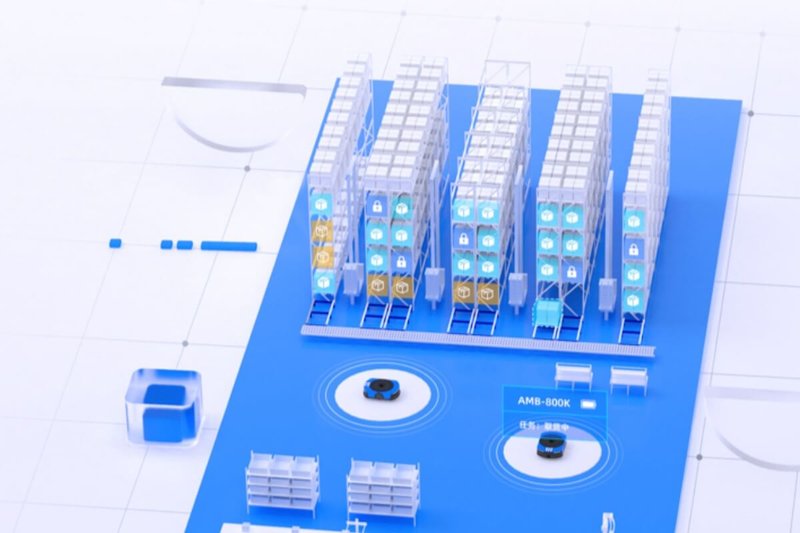
I will compare the usual fixes with a cleaner approach that respects human rhythm, network limits, and battery life. We will keep terms simple and proofs practical. Look, it’s simpler than you think. Let’s move to the weak links that hold teams back, and then to what replaces them next.
Hidden Gaps the Old Playbooks Miss
Why do hand-offs fail?
Legacy stacks lean on polling loops, rigid SLAM maps, and stitched WMS connectors. They look neat, but they age fast under load. A path planner computes an optimal route; then the fleet orchestration layer reshuffles tasks; then a picker steps in—timing slips. The result is jitter at intersections and deadlocks near docks. Middleware with weak QoS turns a 50 ms event into a 500 ms delay. Edge computing nodes exist, but they often run “light” logic, so every small choice goes back to the server. That means extra hops, more retries, and stale state.
Another gap sits in the battery loop. Chargers and power converters are treated as fixed resources, not as part of the planner. Robots rush to charge at 30% because the rule says so, then queues form, and throughput dips. APIs from WMS to AMR are chatty, so a single SKU change triggers a flood of updates. The floor feels this as hesitation. It is not one big bug. It is a set of tiny, predictable drags that pile up. A better design reduces the hand-offs and makes each one explicit, timed, and testable.
From Baselines to Better: Comparative Principles that Scale
What’s Next
New rules favor signals over schedules. Instead of polling, use event-driven flows with strict QoS and back-pressure. The idea is simple: plan globally, decide locally. Keep high-level intents in the cloud, but let edge computing nodes own micro-decisions like yield-at-corner, dock approach, and slot exit. Running local SLAM refinement and intent-aware collision avoidance trims jitter. Tie the charger plan into the task graph, so energy is a constraint, not a panic button. When robotic amr software enforces this split—intent on top, reflex at the edge—the floor gets smoother fast.
Compare two sites. Site A uses a single, centralized dispatcher. Site B uses a layered model: global fleet orchestration, per-zone coordinators, and ROS 2 nodes with time-synced clocks. Site A sees bursts of queueing when the network spikes. Site B degrades gracefully—funny how that works, right? Both run the same number of robots, but Site B finishes waves earlier because hand-offs are fewer, and messages carry context, not just commands. Even the WMS link becomes calmer: fewer, richer updates with state diffs instead of full payloads.
So, how do you choose a path forward? Use advisory checks that you can test in a week, not a quarter. First, measure event latency end-to-end: plan to motion start under mixed load (target sub-150 ms with jitter bounds). Second, track intersection stability: conflict rates per 1,000 crossings with human traffic present. Third, verify energy fairness: mean time-to-charge and variance across robots, tied to task urgency. If a platform meets these, it will cope with peak season and odd hours. If it cannot, the floor will tell you soon. When in doubt, keep the flow small, observable, and local—then scale.
In short, retire brittle polls and implicit hand-offs. Prefer intents, bounded latency, and edge reflexes. This keeps people safe, plans honest, and robots useful. For teams seeking a durable baseline and a practical path to scale, consider the approach and the tools behind it, including SEER Robotics.